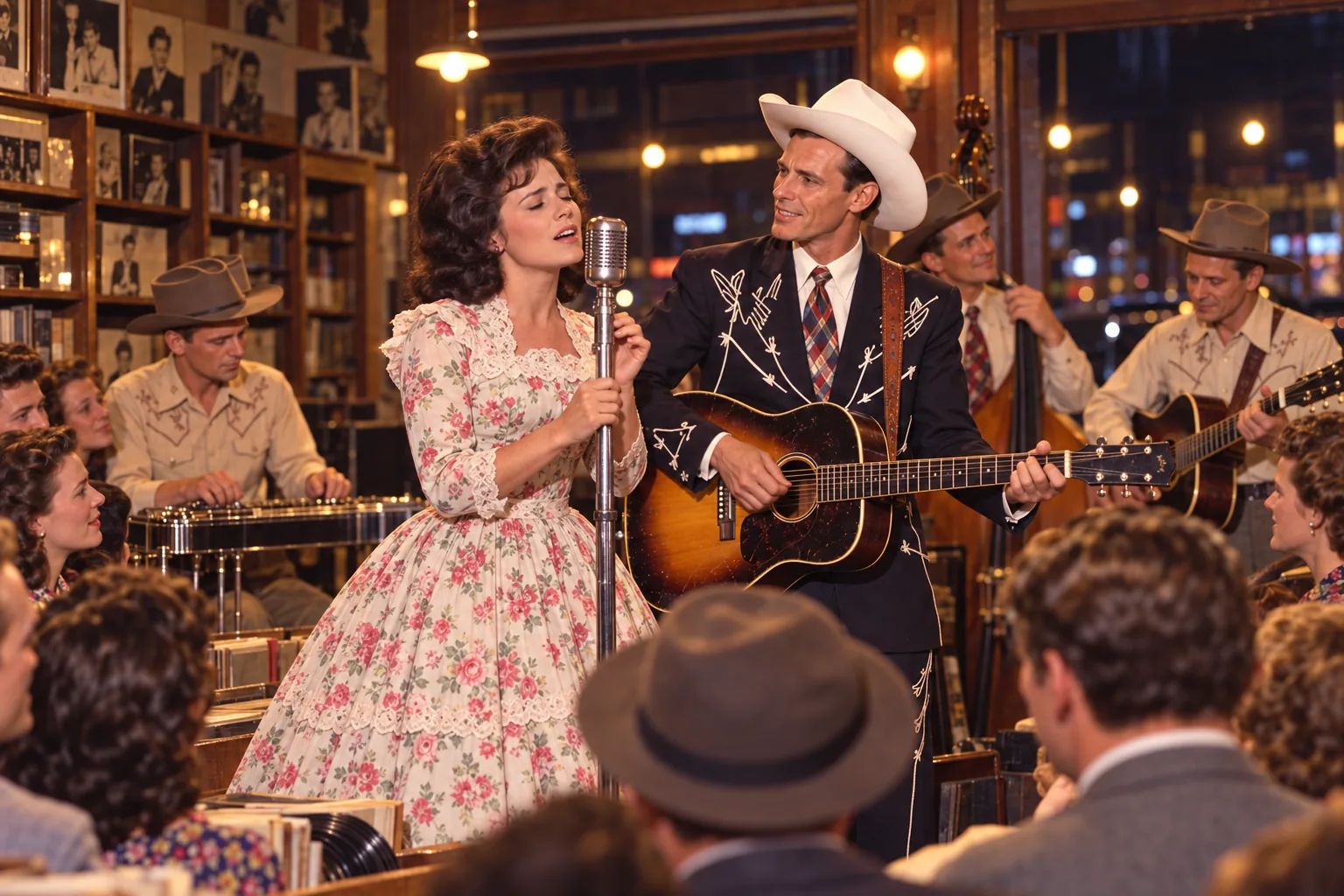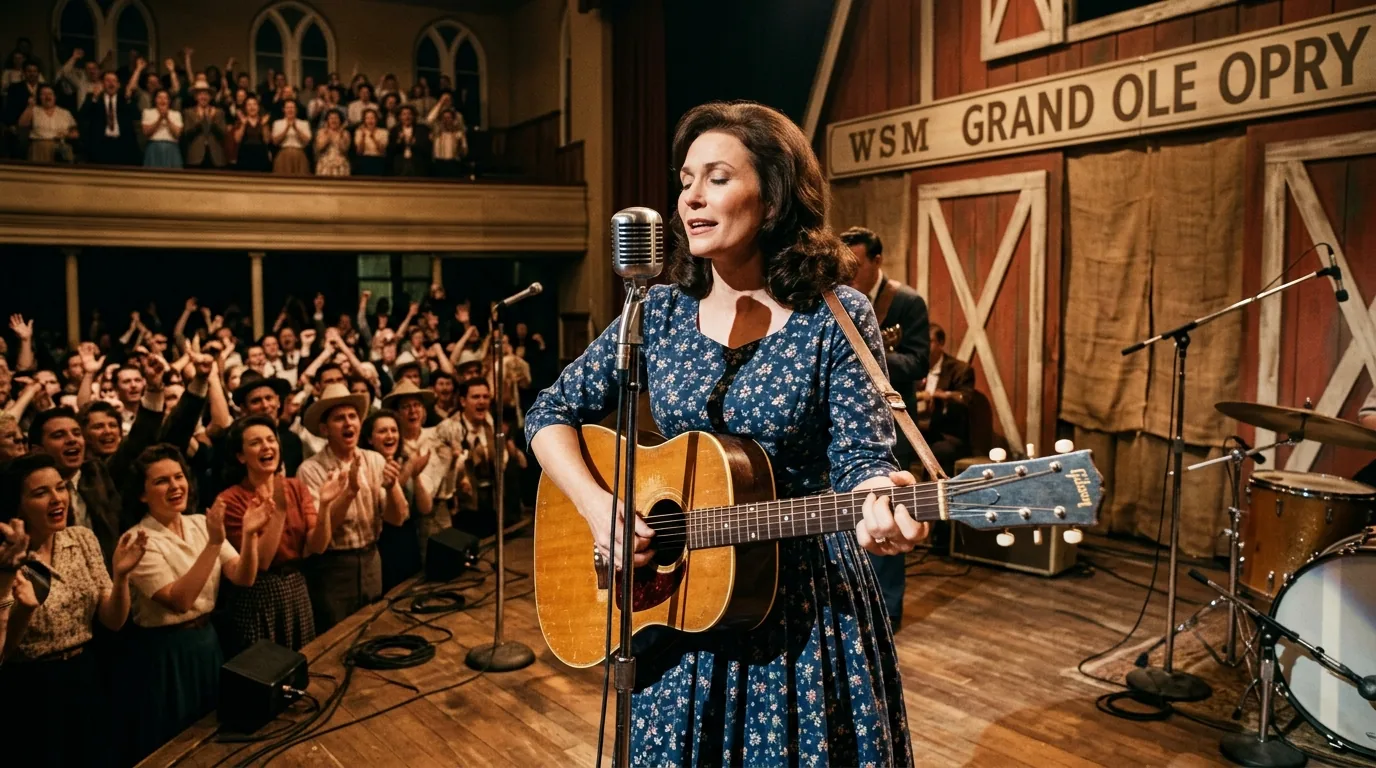
Ask how the Grand Ole Opry got its name and you will usually hear about George D. Hay, the station manager and announcer at WSM radio in Nashville. Part of that story belongs to a small harmonica player named DeFord Bailey. He was country music's first African American star, and for a long time he was one of the most heard performers on the show.
A boy, a harmonica and the sounds of Smith County
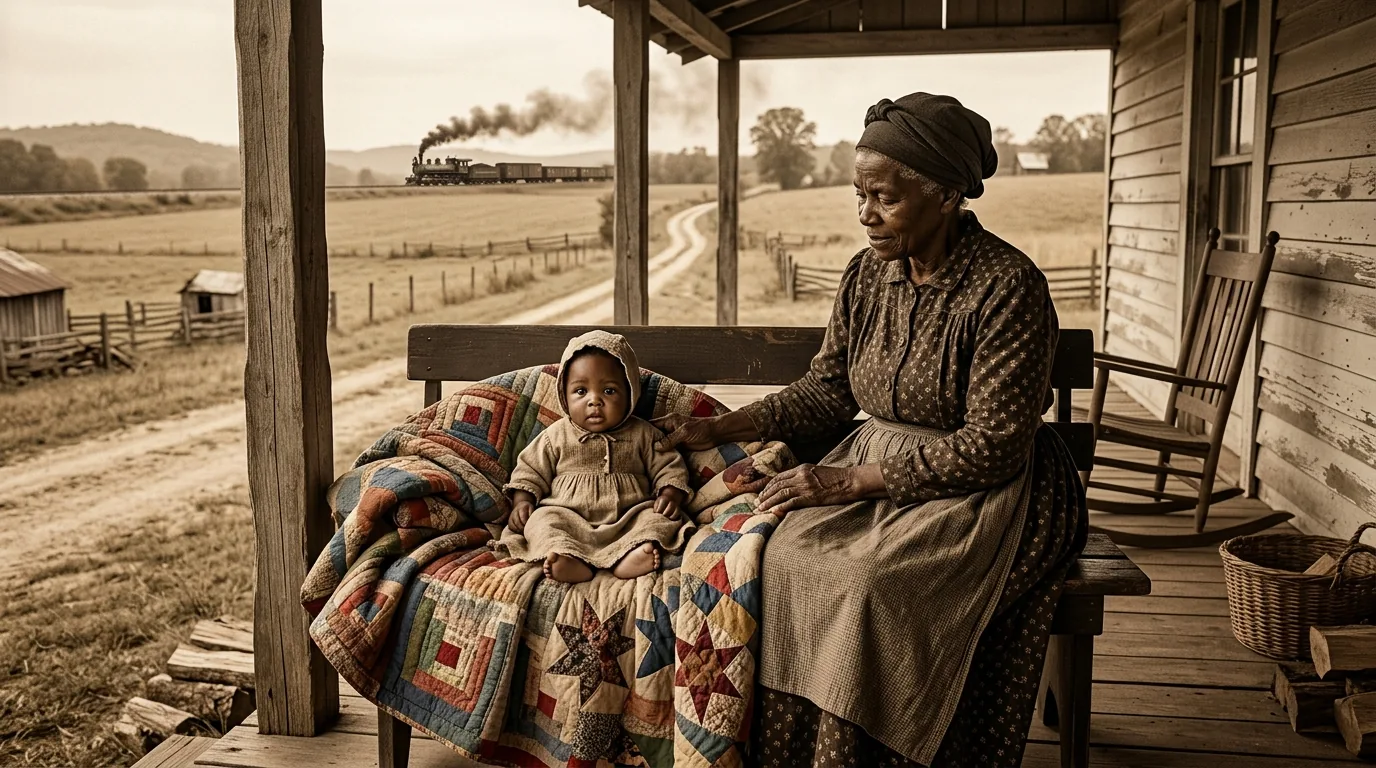
Bailey was born on December 14, 1899, in the Bellwood community of Smith County, Tennessee. His mother died soon after he was born, and he was raised by his aunt Barbara and her husband, Clark Odum.
He grew up surrounded by what he called "Black hillbilly music." His grandfather was a local champion fiddler, and other relatives played guitar, banjo and harmonica. Later in life Bailey told David Morton, "My folks didn't give me no rattler, they gave me a harp."
 AI illustration
Polio struck him at age three. It stunted his growth, left his back somewhat bent and kept him from heavy farm work. So he practiced the harmonica. He learned to imitate trains, fox hounds and farm animals, and he built up an unusual set of trills, puffs and blended notes.
From the Barn Dance to the Grand Ole Opry
Bailey moved to Nashville in 1918. He worked as a domestic for well-to-do families and later as an elevator operator at the National Life and Accident building. In his free time he went to theaters to hear blues singers such as Bessie Smith and Ma Rainey.
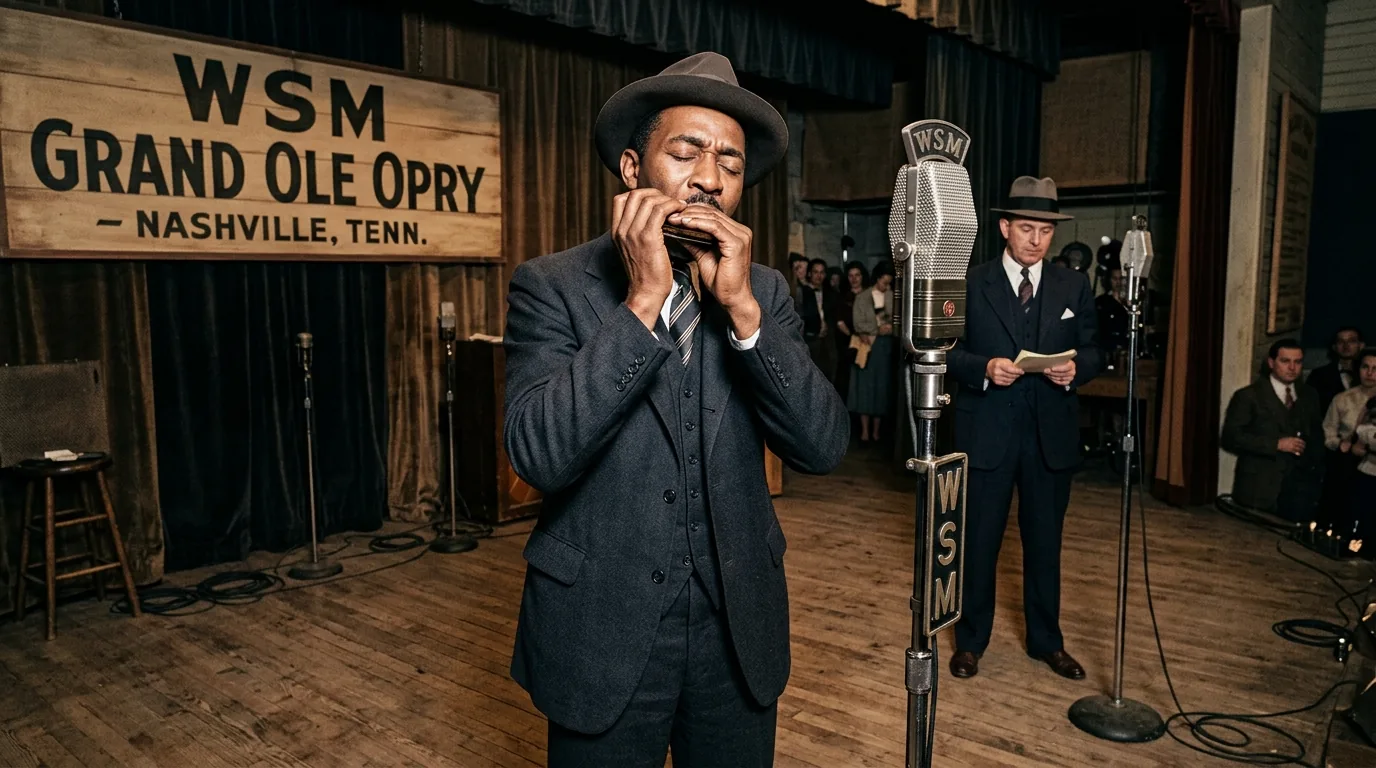
In 1925 he played on the Nashville station WDAD. Soon afterward Dr. Humphrey Bate, a harmonica player himself, brought him to the WSM Barn Dance, which had debuted on October 5, 1925. By June 1926 Bailey was a regular, known as the Harmonica Wizard. Two of his showpieces were "Fox Chase" and "Pan American Blues," his imitation of a train.
On one evening in 1927, usually given as December 10, the Barn Dance followed a broadcast of classical music. Hay introduced Bailey's train piece and remarked that "from now on we will present 'The Grand Ole Opry.'" The name stuck. Bailey's performance had opened the first show under the new name.
 AI illustration
By 1928 Bailey was appearing on the Opry more often than any other performer. In 1927 he traveled to New York to record for Brunswick. In 1928 he took part in the first major recording session held in Nashville, for RCA Victor. Most of those Victor recordings were never released, and he did not record again for decades.
After WSM raised its power to 50,000 watts in 1932, his harmonica could be heard from the East Coast to the Rocky Mountains. He toured with Uncle Dave Macon, Roy Acuff and Bill Monroe. On the road he played guitar left-handed, did yo-yo tricks and beat rhythm with sticks or bones.
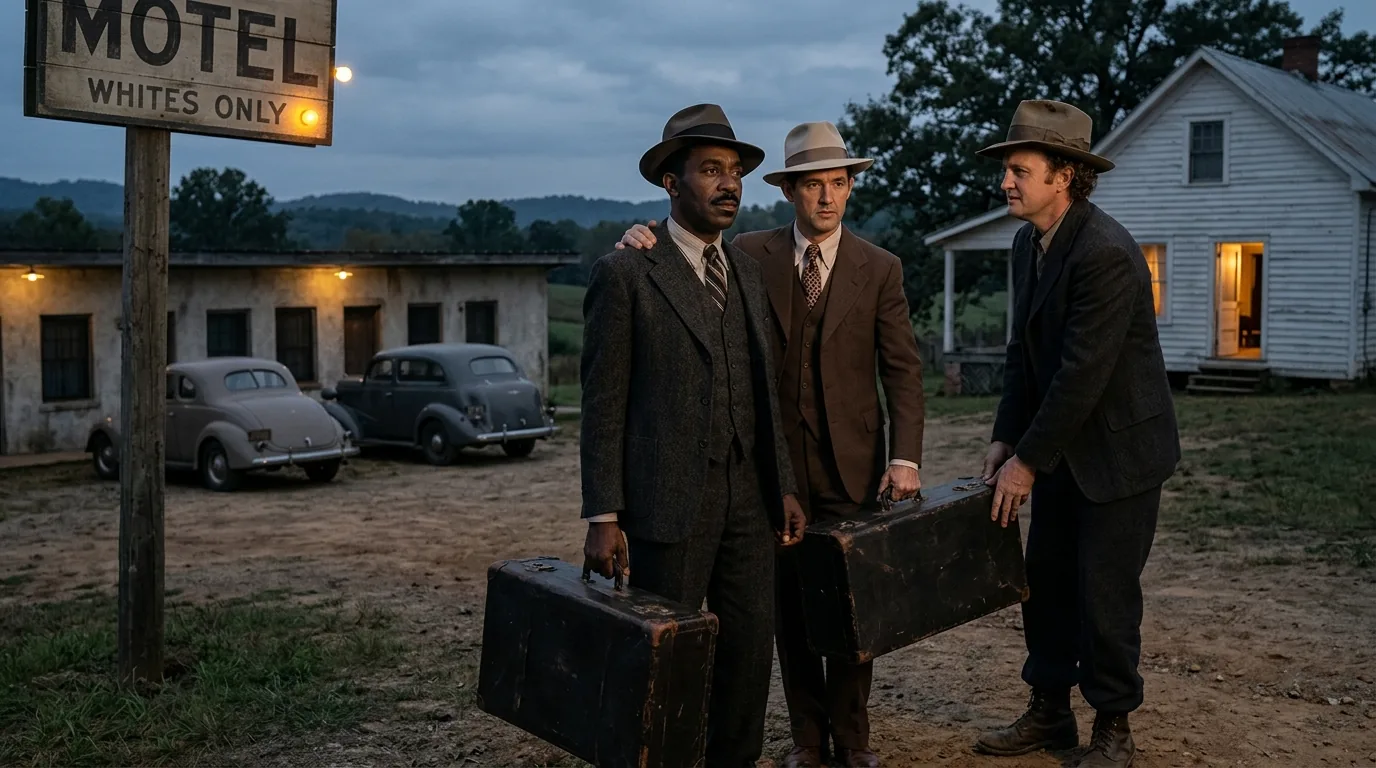
Touring the segregated South was hard on him. Hotels often turned Bailey away, and he had to find lodging with local Black families. Many audiences were surprised to see that he was Black, because the radio broadcasts had not mentioned it. Some publicity condescendingly called him the Opry's "mascot."
 AI illustration
1941: Let go at the height of his career
In 1941 a fight between radio stations and ASCAP, the music licensing organization, cost Bailey his job. For most of that year, stations could not broadcast ASCAP-licensed songs without risking heavy fines. WSM warned Bailey against playing his ASCAP numbers, several of which were listener favorites, and fired him late that year.
The Tennessee Encyclopedia says the firing had several causes: the licensing fight, changing musical tastes and the Opry's growing professionalism. Bailey's own account of what happened differs from the station's.
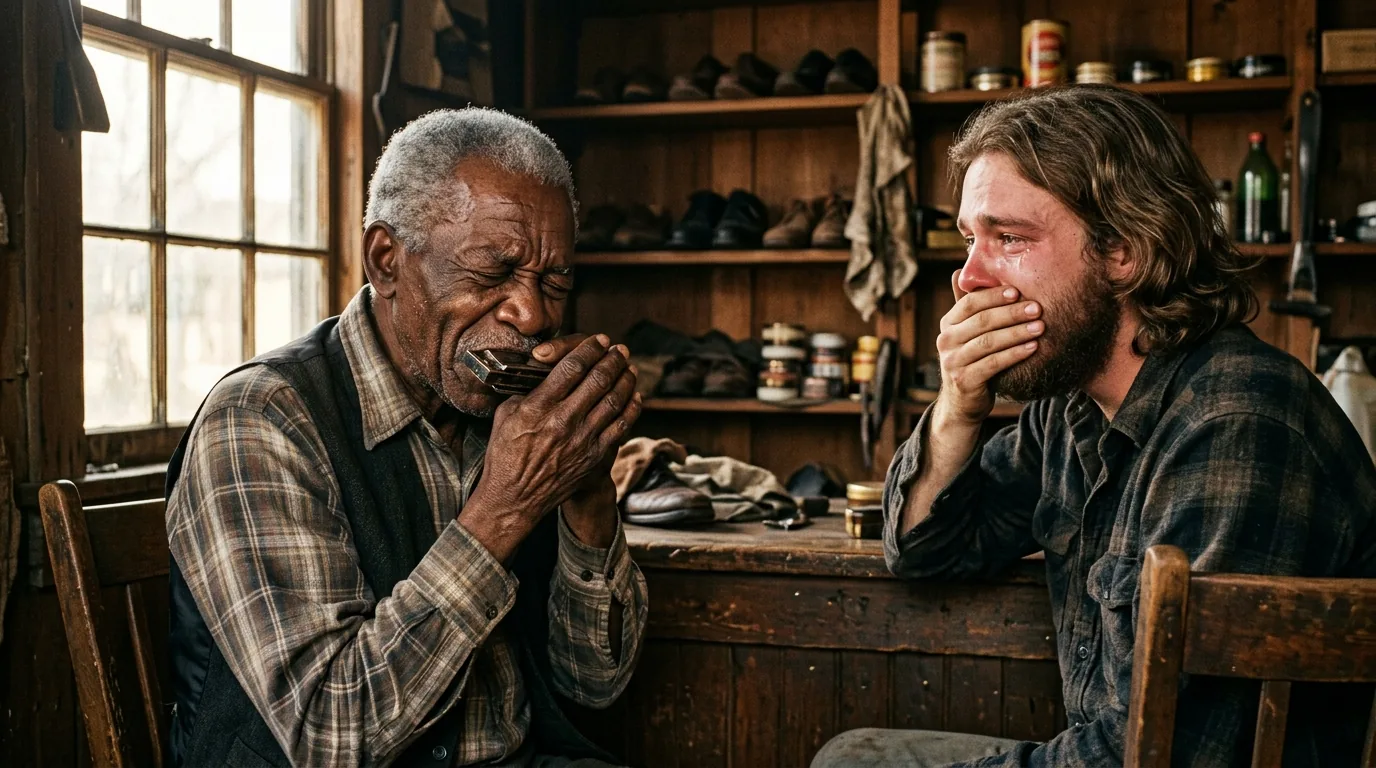
Bailey was hurt and angry. He gave up performing for a living. He ran a shoeshine business on Twelfth Avenue South for about thirty years and rented out rooms in his home.
Rediscovery and a final return
Bailey's music did not disappear completely. In the 1960s a group of young folk music fans in Nashville, including Dick Hulan, Archie Allen and James Talley, sought him out. He began playing at local coffeehouses and festivals, and in 1965 he gave a concert at Vanderbilt University. He still turned down offers to record, to play the Newport Folk Festival and to appear in Hollywood films.
David Morton first met Bailey while writing a story for a Nashville public housing newsletter. Morton's father had encouraged him to look Bailey up. Starting in 1974, Morton, a housing authority worker, persuaded Bailey to make a series of guest appearances on the Opry and to tell his life story for later generations. That year Bailey played a special show marking the Opry's move from the Ryman Auditorium, and his appearance helped start the Opry's annual Old Timers' shows. On December 14, 1974, his 75th birthday, he performed at the Grand Ole Opry House.
DeFord Bailey died in Nashville on July 2, 1982, at age 82. He is buried in Greenwood Cemetery. In June 1983 the country music industry honored him with a monument at his grave.
For about ten years Morton recorded his conversations with Bailey and collected his letters and papers. With country music historian Charles K. Wolfe, he wrote DeFord Bailey: A Black Star in Early Country Music, published by the University of Tennessee Press in 1991. A paperback edition followed in 2023.
 AI illustration
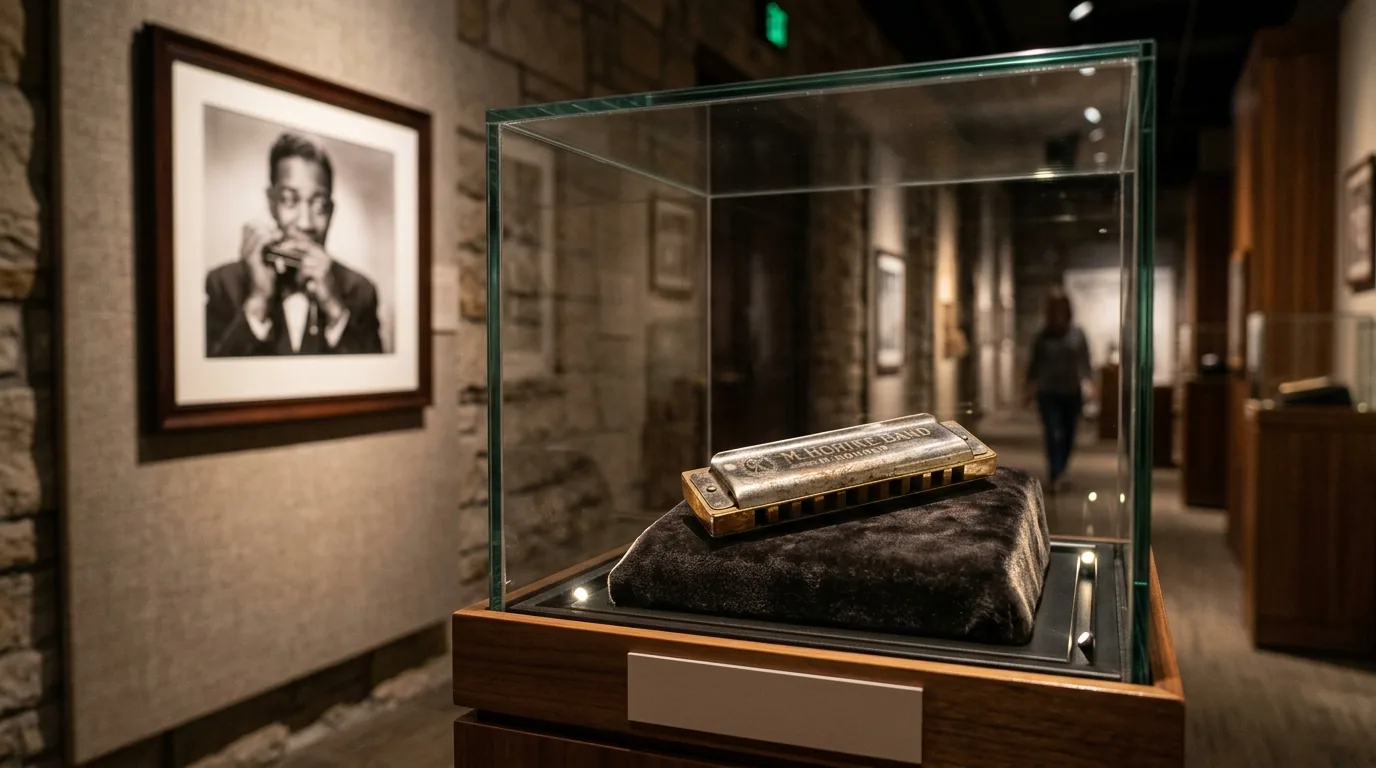
The Country Music Hall of Fame inducted Bailey in 2005, more than twenty years after his death. In 2022 the Grand Ole Opry formally apologized for how it had treated him.
Bailey's story still matters because it shows how much of country music's early sound came from Black musicians, and how easily their part could be left out. As one scholar has put it, his life was "a parable of integrity and survival." The record shows a man who kept his dignity through a hard life.
Watch the story

This video is a narrated, dramatized retelling with a synthetic voice and AI-generated images; the article above sticks to the documented record. The video loads from YouTube only when you press play.
Key facts
- Born December 14, 1899, in Bellwood, Smith County, Tennessee. Polio at age three left him small and with a bent back.
- A WSM Barn Dance regular by 1926. In 1927 George D. Hay renamed the show the Grand Ole Opry while introducing Bailey's train piece.
- Toured with Uncle Dave Macon, Roy Acuff and Bill Monroe, and was often refused hotel rooms under Jim Crow.
- WSM fired him in 1941 during the radio industry's licensing fight with ASCAP. He then ran a shoeshine business on Twelfth Avenue South.
- Young folk fans sought him out in the 1960s (Vanderbilt concert in 1965). Starting in 1974, David Morton persuaded him to make guest appearances on the Opry, including a 1974 show that led to the annual Old Timers' shows and a 75th-birthday performance.
- Died July 2, 1982. Morton and Charles Wolfe's biography came out in 1991. Inducted into the Country Music Hall of Fame in 2005.
One true story from the golden age, every week
A short, carefully researched story about the legends of country, soul, rock and classic Hollywood, with a video to watch. Free, and you can leave any time.
We never share your address. One email a week at most.Sources
- DeFord Bailey · Country Music Hall of Fame and Museum — countrymusichalloffame.org
- DeFord Bailey · Tennessee Encyclopedia (Tennessee Historical Society) — tennesseeencyclopedia.net
- DeFord Bailey (1899-1982) · Tennessee State University Library — library3.tnstate.edu
- We Lost the Harmonica Wizard Who Was the First Black Star of the Grand Ole Opry · American Songwriter — americansongwriter.com
- DeFord Bailey · Wikipedia — en.wikipedia.org
- Deford Bailey: A Black Star in Early Country Music (review) · Publishers Weekly — www.publishersweekly.com
- DeFord Bailey: A Black Star in Early Country Music (review) · Bookreporter — www.bookreporter.com