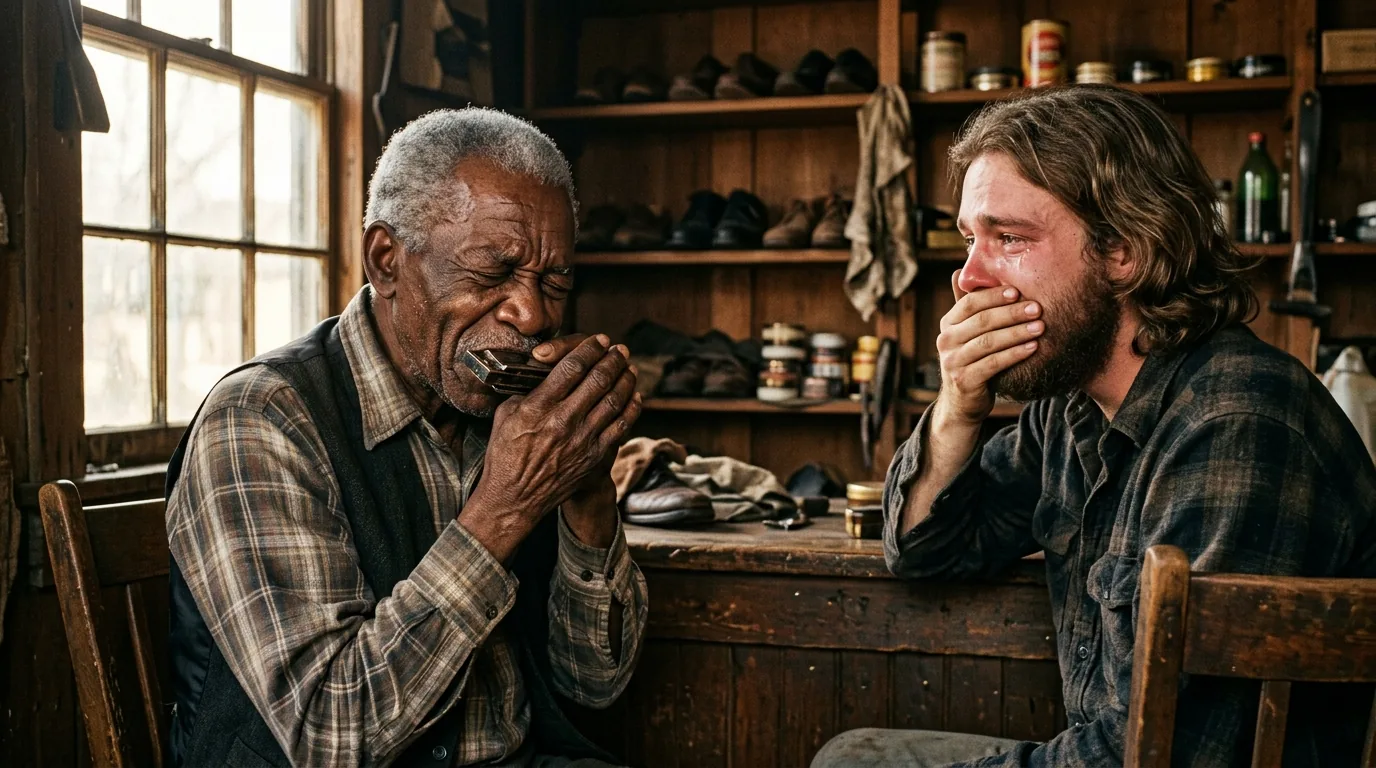
In the spring of 1947, Ernest Tubb was already one of the biggest names on the Grand Ole Opry. That May he started something new in downtown Nashville: a record store that sold nothing but country music. A late-night radio show grew out of it, and young performers soon learned it was one of the best places in town to be heard.
A farm boy who wanted to sound like Jimmie Rodgers
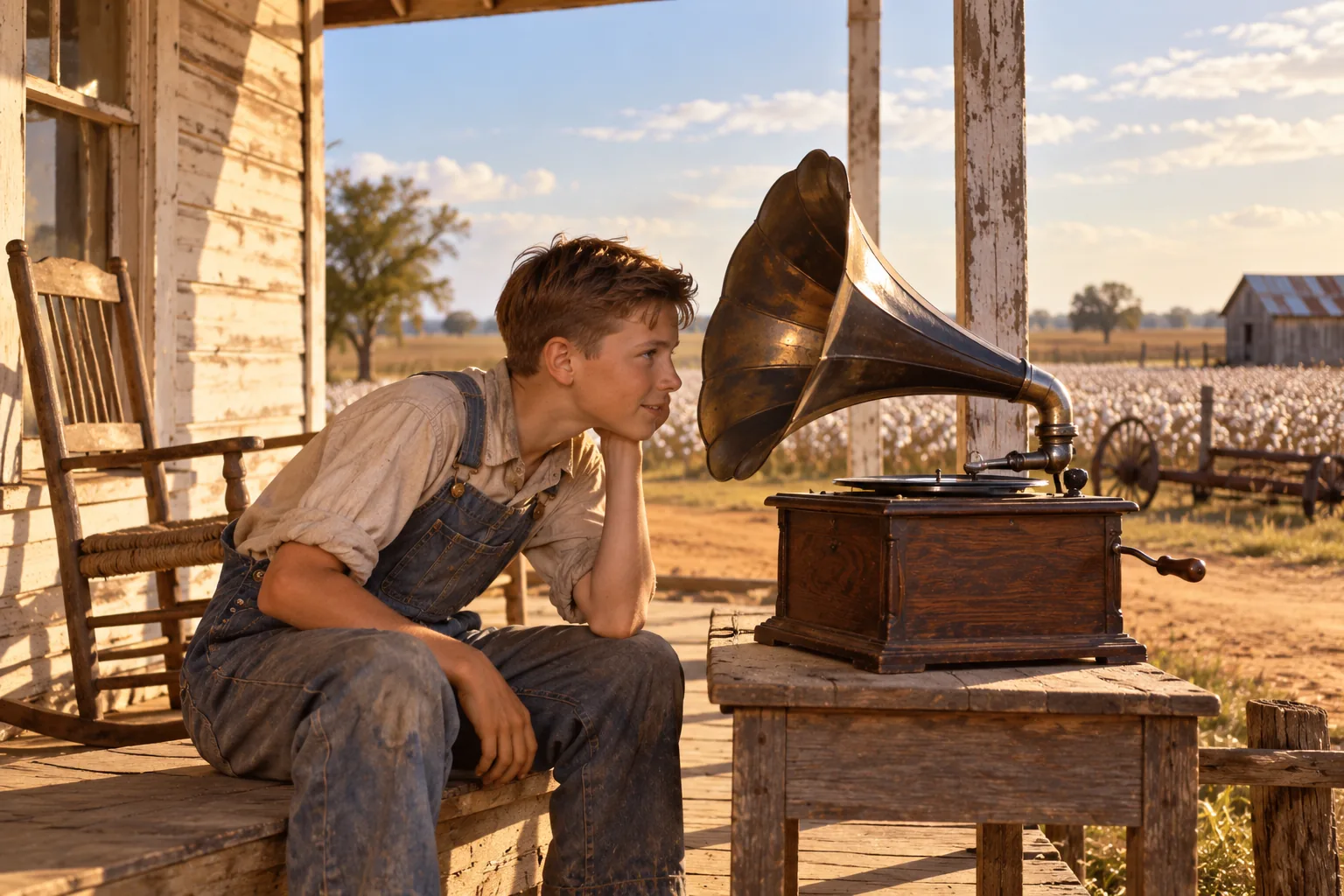
Ernest Dale Tubb was born on February 9, 1914, near Crisp, Texas, into a sharecropping family. He taught himself to play guitar as a teenager. In 1928 he heard the records of Jimmie Rodgers, and he made up his mind to sing like him. He learned Rodgers' yodel and copied his guitar style.
 AI illustration
Rodgers died in 1933, when Tubb was nineteen. Tubb moved into radio work in San Antonio, the city where Rodgers had lived. He worked as a soda jerk and took an unpaid job at radio station KONO.
In 1936 Tubb found Carrie Rodgers, Jimmie's widow, in the phone book and called her to ask for an autographed photo of her late husband. She agreed, and the two became friends. She helped him buy stage clothes, helped him find songs and helped him get a recording contract. That same year he made his first records in San Antonio for Victor, the label Jimmie Rodgers had recorded for.
Carrie Rodgers also loaned him one of Jimmie's Martin guitars, and he went on to play it for nearly 40 years. The early records did not sell, though.
Finding his own voice
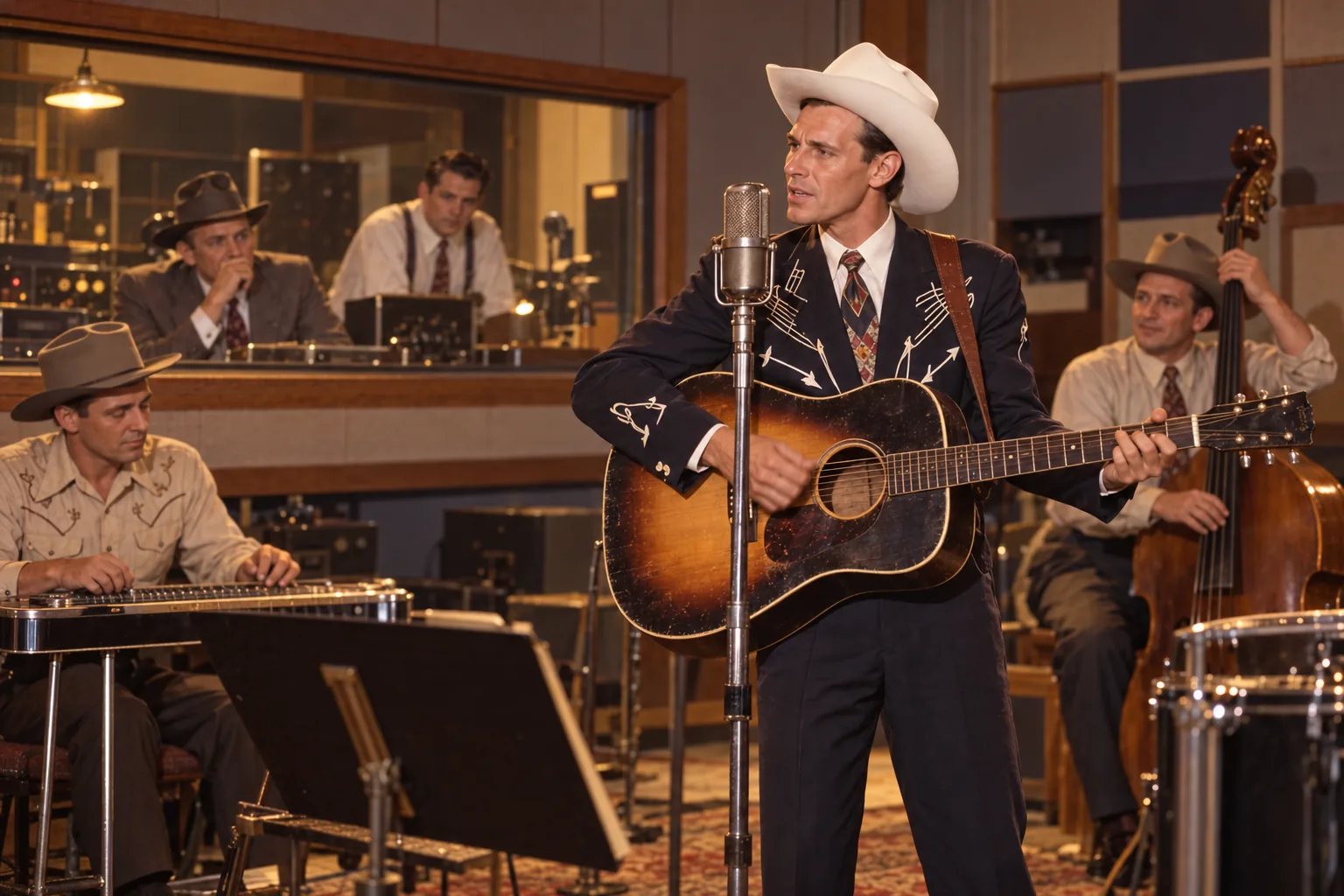
In 1939, a tonsillectomy in San Angelo lowered Tubb's voice, and he could no longer yodel well. The Country Music Hall of Fame says the setback pushed him to become "a more energetic and effective songwriter." In 1940 he signed with Decca Records. His 1941 song "Walking the Floor Over You" crossed over to the pop market and reportedly sold a million copies.
 AI illustration
On January 16, 1943, Tubb made his Grand Ole Opry debut at Nashville's War Memorial Auditorium. He joined the regular cast that February and stayed one of the Opry's major stars for the rest of his career.
The shop and the Midnite Jamboree
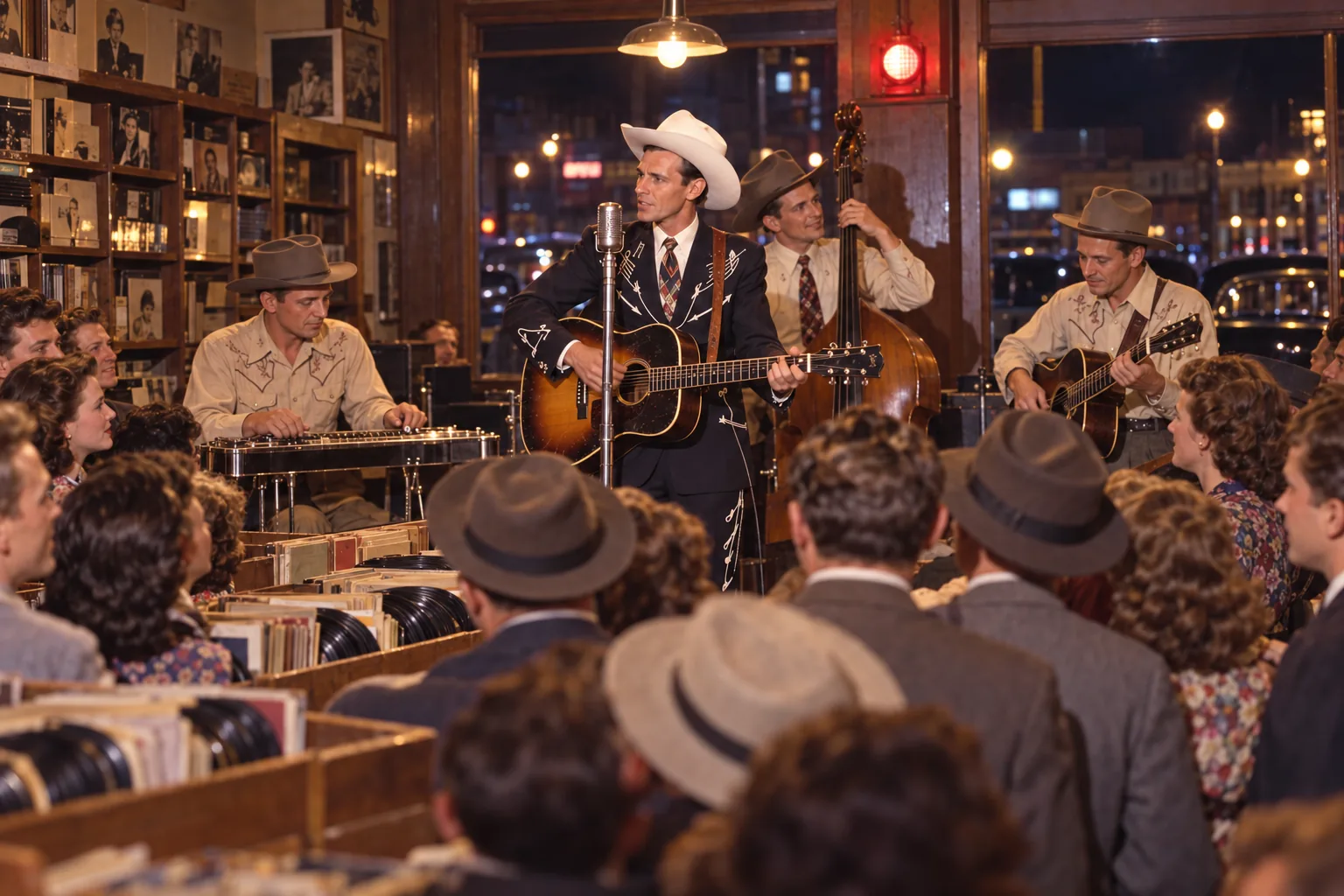
Fans in those years often had trouble finding a store that carried country records. Tubb's answer was the Ernest Tubb Record Shop, which opened on May 3, 1947, at 720 Commerce Street. The Hall of Fame calls it "the first major all-country record store."
Much of the early business came by mail. Tubb reportedly sold mail order partly so he would not offend the stores that already stocked his records. Records were still breakable shellac 78s, and many arrived broken. Tubb promised to replace every one, which reportedly cost him about $10,000 a year.
The Midnite Jamboree started that same year. It aired on WSM on Saturday nights, right after the Grand Ole Opry signed off, from a stage inside the shop and in front of a live audience. The record shop paid WSM for the airtime. According to the Hall of Fame, the show mostly featured deserving young hopefuls and their newest records. Selling records was part of the purpose too.
 AI illustration
In 1951, the store and the radio show moved to 417 Broadway, where the Jamboree stayed until 1976.
The people he helped
Tubb was known as a generous man. The Hall of Fame names Johnny Cash, Patsy Cline, Skeeter Davis, Jack Greene, Stonewall Jackson, Loretta Lynn, Cal Smith, Hank Snow and Hank Williams among the many performers who owed him something.
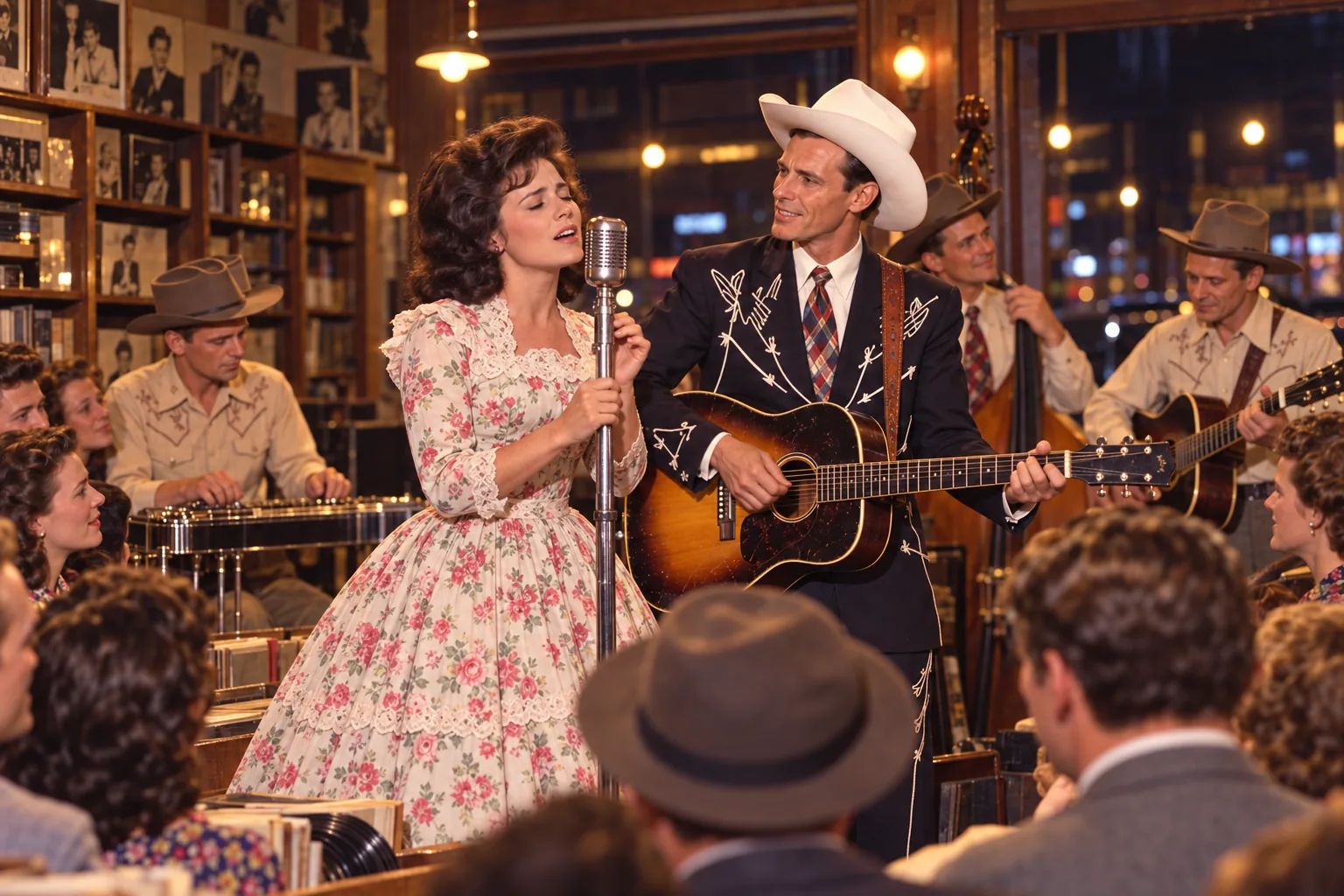
Loretta Lynn's story is the best known. Her first single, "I'm a Honky Tonk Girl" on the small Zero label, entered the national country chart in 1960 and reached No. 14. She and her husband drove around the country asking radio stations to play it. They reached Nashville that fall, and she sang on the Opry for the first time in October 1960. Tubb had given up his own spot that night so she could have it, even though the two had never met.
 AI illustration
After that, Tubb had Lynn sing on the Midnite Jamboree almost every Saturday night early in her career. In 1961 she dedicated a song on the show to Patsy Cline, who was in the hospital after a car accident. Cline heard it and sent her husband to bring Lynn to her bedside, which started their friendship. Lynn joined the Opry as a member in 1962.
Tubb kept up a hard pace. From the early 1960s until 1982 he and his band, the Texas Troubadours, played 150 to 200 shows a year. In 1965 he was elected to the Country Music Hall of Fame as its sixth member. Emphysema forced him off the road, and he played his last show on November 13, 1982. He died in Nashville on September 6, 1984.
The Midnite Jamboree outlived him by decades. It stopped broadcasting in January 2026, after the record shop closed. The story still matters because it shows a simple chain of events. Carrie Rodgers gave a young stranger a hand. Years later, he used his own shop and radio time to give other newcomers theirs.
Watch the story

- The Open Microphone
- Saturday Night on WSM
- The Boy from Crisp
- A Voice of His Own
- The First Saturdays
- Who Walked In
- The Long Years
- Why the Door Stayed Open
This video is a narrated, dramatized retelling with a synthetic voice and AI-generated images; the article above sticks to the documented record. The video loads from YouTube only when you press play.
Key facts
- Ernest Tubb opened the Ernest Tubb Record Shop at 720 Commerce Street in Nashville on May 3, 1947, because country records were hard to find; much of its early business was by mail.
- The Midnite Jamboree began on WSM in 1947. It aired from the shop after the Saturday Opry and mostly showcased young hopefuls and their new records.
- In 1936 Tubb contacted Carrie Rodgers, Jimmie Rodgers' widow. She helped him get a Victor recording contract and loaned him one of Jimmie's Martin guitars, which he played for nearly 40 years.
- A 1939 tonsillectomy ended Tubb's yodeling. He signed with Decca in 1940, and "Walking the Floor Over You" became a hit in 1941.
- Tubb is credited with helping many newcomers. He gave Loretta Lynn his Opry slot in October 1960 and had her sing on the Jamboree almost weekly.
One true story from the golden age, every week
A short, carefully researched story about the legends of country, soul, rock and classic Hollywood, with a video to watch. Free, and you can leave any time.
We never share your address. One email a week at most.Sources
- Ernest Tubb · Country Music Hall of Fame and Museum — www.countrymusichalloffame.org
- Ernest Tubb · Tennessee Encyclopedia (Tennessee Historical Society) — tennesseeencyclopedia.net
- Tubb, Ernest Dale · Handbook of Texas Online (Texas State Historical Association) — www.tshaonline.org
- Midnite Jamboree · Wikipedia — en.wikipedia.org
- Ernest Tubb Record Shop · Nashville Sites — nashvillesites.org
- How Ernest Tubb Connected with the Widow of His Hero Jimmie Rodgers to Change Country Music History · American Songwriter — americansongwriter.com
- Instrumental History: Inspired by Jimmie Rodgers' Martin 000-45 Guitar · Birthplace of Country Music Museum — birthplaceofcountrymusic.org
- Loretta Lynn at 90, and the Ernest Tubb Record Shop · Saving Country Music — savingcountrymusic.com
- Loretta Lynn's Grand Ole Opry Debut · uDiscover Music — udiscovermusic.com